SOUND MATERIAL
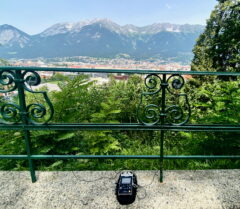
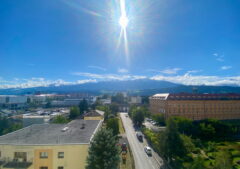
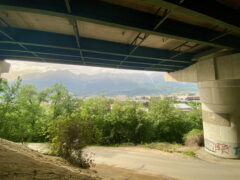
Field recordings from both sides of Innsbruck, captured simultaneously, serve as the foundation for the composition
THE SPACE
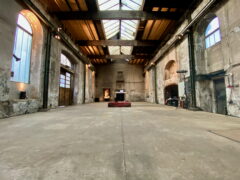
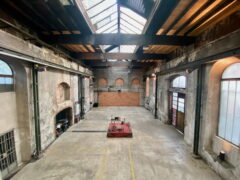
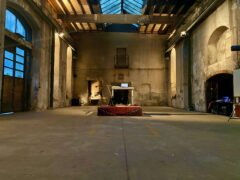
The sound material is shaped by the architecture of the former textile factory, playing a key role in the spatial composition.
ELECTRIC BASS
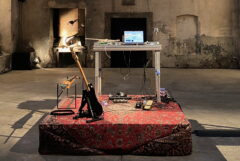
Field recordings merge with e-bass and e-upright bass, the e-bass using live effects.
27.09.2025
8:00 PM, Innsbruck | St. Bartlmä, Alte Gießerei, Hall 6
Hannes Strobl
Resonance IBK is a spatial sound composition for electric bass, electronics, field recordings, four trombones and the factory space. world premiere, 60′
Commissioned by Klangspuren Schwaz, supported by the BMWKMS
Hannes Strobl – Concept, Composition, Electric Bass, E-Upright Bass, Field Recording
Christof Dienz – Interludes for Brass
Students of the Tyrolean State Conservatory:
Finn Eberhard, Marc-Anton Allmaier, Moritz Werth, Tobias Baumann: Trombone
Excerpts from 5 Parts
https://klangspuren.at/festival/festival-programm/festival-detail-1/resonance-ibk/
The composition Resonance IBK for electric bass, electronics, field recordings, and four trombones is based on simultaneous audio recordings made on both sides of the Inn Valley near Innsbruck. The title refers to the phenomenon of resonance, which is explored both sonically and conceptually throughout the piece. Urban sounds interact with the environment, architecture, and ourselves, influencing our perception and leaving lasting traces in our thoughts, actions, and emotions.
The unique topographical location of Innsbruck – nestled between towering mountain ranges – gives the city a distinctive acoustic character. A significant feature is the Inntalautobahn (A12), one of the most important traffic hubs in Tyrol. With approximately 28 million vehicles expected in 2024, it is the busiest section of highway in the region. Due to the specific topography, which reflects the sound of the highway off the surrounding mountains, the constant hum and roar of traffic remain clearly audible even above the tree line, at altitudes of up to 2,000 meters.
This acoustic presence is actively integrated into the composition, performed in the former factory hall, St. Bartlmä, in Innsbruck. Located by the Sill River and the A12 highway, the hall becomes a resonant space where the music merges with both live sounds and field recordings from the surroundings. The architectural characteristics—shape, size, and material—define the room’s acoustic properties, making the space itself a crucial element of the composition. Sound waves interact with the room, creating resonances, reflections, and dampening effects, shaping and modulating the sonic experience.
Special thanks to the work of tamtam (Sam Auinger / Hannes Strobl), without which this album would not have been possible.